Loading...
History
From the opening in 1923 to today's modern arena
Skagerak Arena in Skien is really two stories in one. The first belongs to Odd Stadion, the storied ground opened in 1923 that housed the oldest football club still in existence in Norway for more than eight decades. The second belongs to the modern all-seater arena that rose on exactly the same plot between 2006 and 2008. The bridge between the two is a handful of nights as big as any in Norwegian club football. Few venues trace the arc of the Norwegian game more clearly — from cup golds in the sport's infancy, through the lean divisional years of the 1980s, to artificial turf, all-seater stands and European football in the modern era.
Then: 1923–2006
Odd Stadion — home of the cup kings
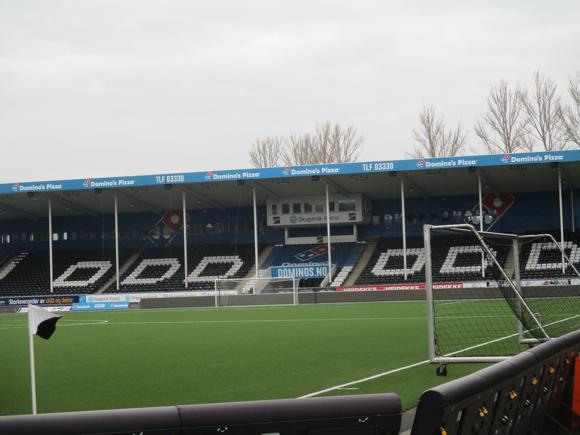
Odds Ballklubb was founded on 31 March 1894 as the football section of Idrætsforeningen Odd, and is regarded as the oldest football club still in existence in Norway. By the time the club moved into Odd Stadion in 1923, it was already the undisputed king of the Norwegian Cup: four consecutive titles from 1903 to 1906, and 17 cup finals between 1902 and 1937, eleven of which ended in gold. With twelve championships in all — the most recent in 2000 — Odd still shares the record for most Norwegian Cup titles with Rosenborg and Fredrikstad.
For over eight decades the old ground carried the club through good times and bad. The 1980s brought the leanest years, as Odd yo-yoed between the second and third levels of the league pyramid — what were then called 2. divisjon and the Norwegian third tier — before the club fought its way back towards the top. The twelfth and most recent of those cup golds, in 2000, was still won while the club played at the old ground. By the end, the stadium held around 8,600 spectators, 5,600 of them seated: venerable, but thoroughly outdated.
Now: 2006–
Skagerak Arena — rebuilt on the same ground
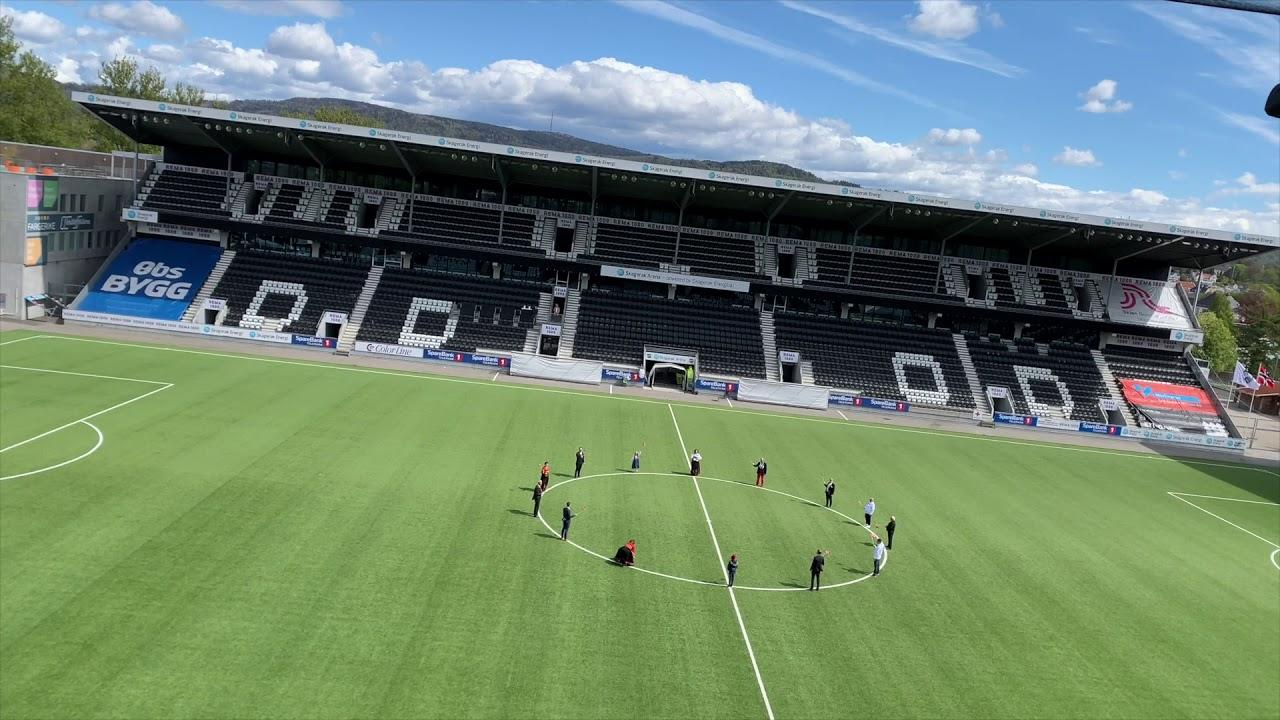
After the 2005 season came the big decision: Odd Stadion would be torn down and replaced by a state-of-the-art football arena on the very same site. Demolition began on 13 November 2006, and the pitch was rotated 90 degrees to make better use of the plot. By 15 April 2007 the lower tier of the new west stand was already open for the first home league match, and by April 2008 three new two-tier stands were complete — around 4,300 seats on each long side and roughly 3,000 behind the southern goal.
The rebuild cost around 250 million kroner, financed in part by selling the naming rights to the energy company Skagerak Energi, the club's main sponsor since 1995. The fully built-out arena was officially opened in 2011. Today it holds 11,767 spectators, every one of them seated, matches are played on artificial turf — and the ground is also home to the Odds Ballklubb women's team.
The bridge between then and now
The European night against Borussia Dortmund
The night that tied old and new together arrived on 20 August 2015, when Borussia Dortmund came to Skien for a Europa League play-off. In front of 12,436 spectators — still the arena's all-time record — Odd stormed into a 3-0 lead against one of Europe's biggest clubs. Dortmund fought back to win 4-3, and the return leg in Germany made it 5-11 on aggregate, but the night lives on as the greatest in the arena's history: the old cup kings of the early 1900s giving a European heavyweight a genuine scare on their brand-new home ground.
The new arena had already shown its range by then: Elton John packed the place for a concert on 20 June 2009, and the record crowd for a domestic fixture — 12,293 — was set on 25 September 2014. The story keeps moving. Relegation from the Eliteserien after the 2024 season sent Odd into the OBOS-ligaen and set the club to work on bringing top-flight football back to Skien. The stage, at least, is worthy of the task: one of Norway's finest football arenas, standing on the same ground the club has called home since 1923, ready for the next chapter in one of the country's richest football histories.